Can your phone actually measure how you move — accurately enough to fix your form? That question is the reason ARKit motion capture is worth paying attention to. Apple’s ARKit reconstructs 3D motion capture from ordinary 2D iPhone video, auto-calibrated and in real time, inside a free app. This post (summarised in the video above) walks through why accurate movement analysis is hard, how the usual options compare, and why a phone is finally a credible tool for it.
Table of Contents
The fitness boom — and why form matters
Fitness apps are everywhere. Downloads jumped from under 2 million in 2013 to more than 4 million in 2018, and the most popular apps have been installed hundreds of millions of times. Some can even estimate barbell speed from a slow-motion clip. But there is a gap between counting reps and actually correcting movement: bad form recruits the wrong muscles and can lead to injury, from shoulder impingement to knee pain. To fix form rather than just track it, you need accurate motion capture — and that is where things get hard.

The hard part: accurate motion capture
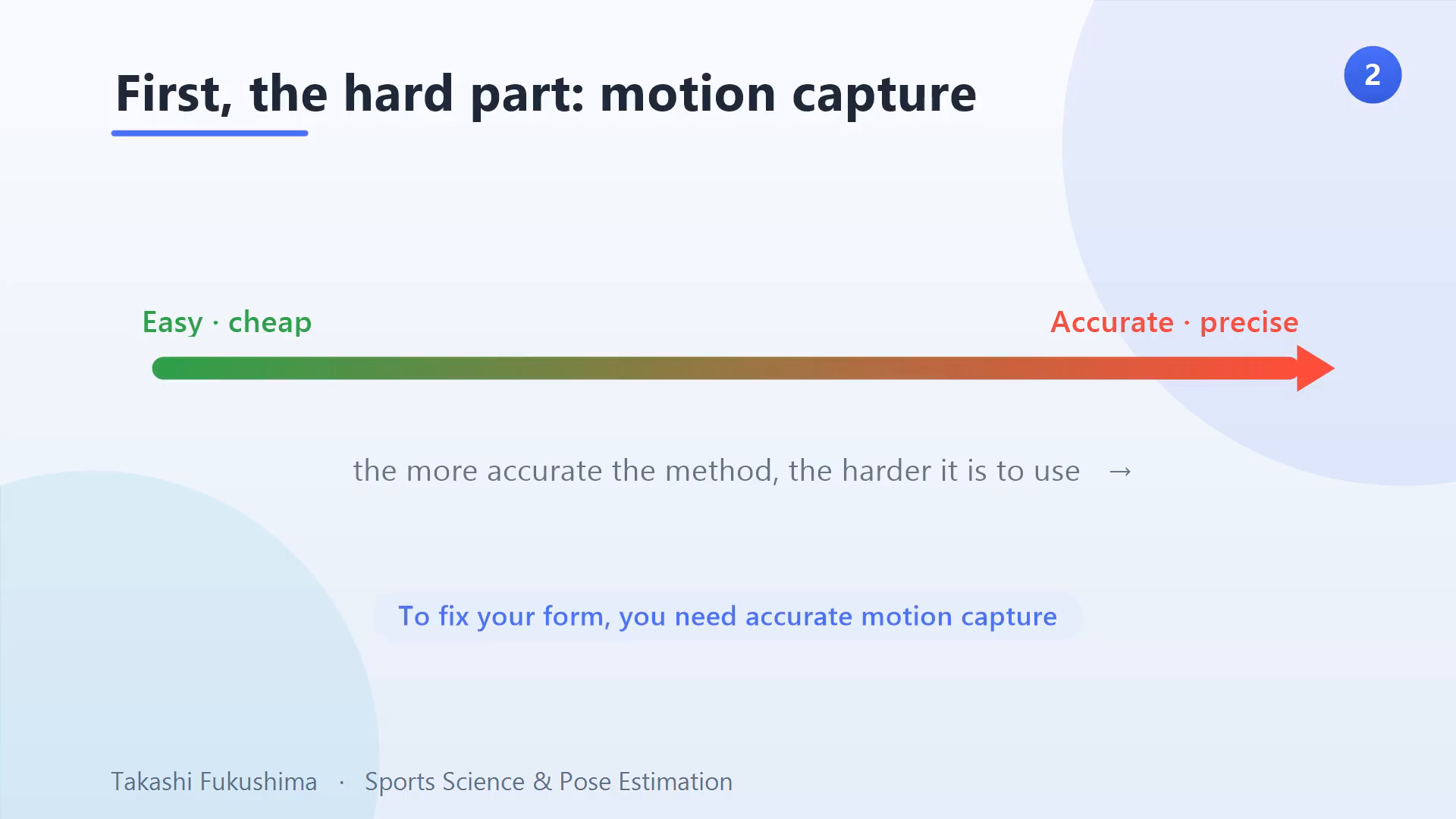
Here is the catch that runs through every option: the more accurate the method, the harder it is to use. Understanding that trade-off is the key to choosing a motion capture setup that fits real-world constraints rather than an idealised lab.
VICON: the 3D gold standard
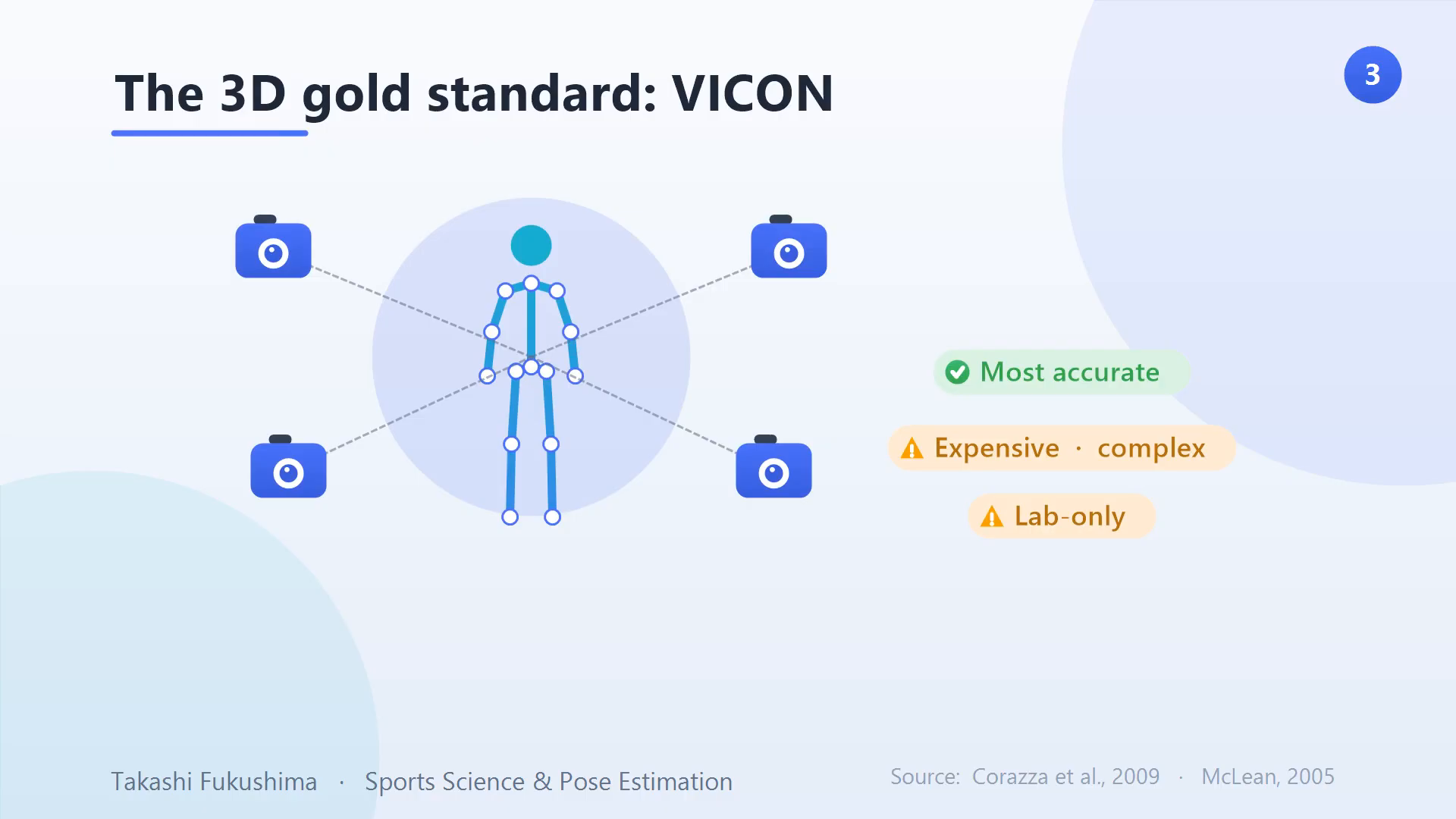
A 3D optical system like VICON is the gold standard — extremely accurate, which is why it anchors most biomechanics research. But it is expensive, complex, and confined to a lab. For an everyday athlete or trainer, it simply is not an option.
2D video: cheap, but limited
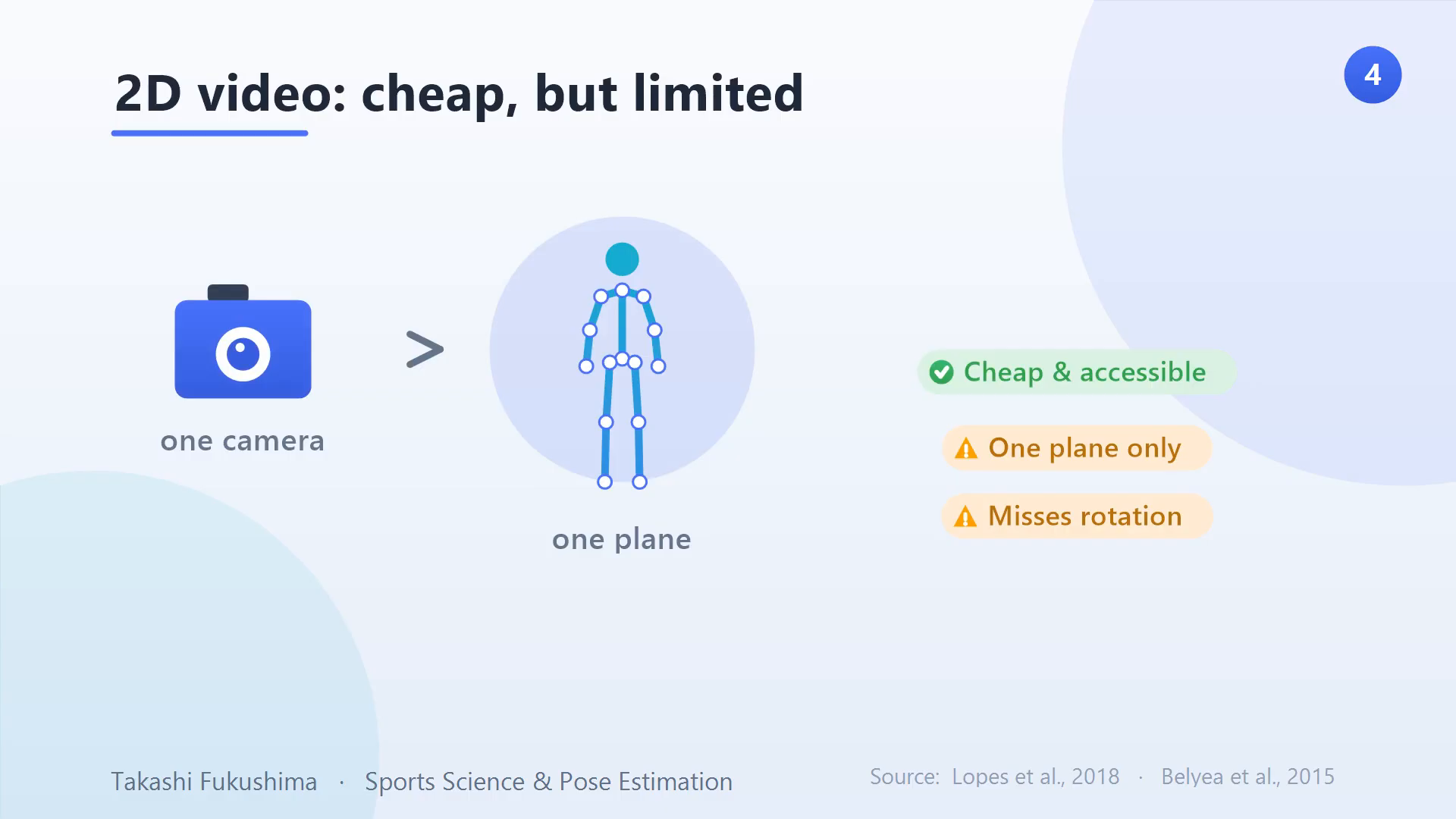
At the other end, 2D video analysis is cheap and accessible — but it only sees one plane at a time and cannot capture rotation. A frontal knee angle can mislead, because knee valgus is tied to hip rotation the camera never sees. Convenient, but easy to misread.
Microsoft Kinect: 3D, but still a device
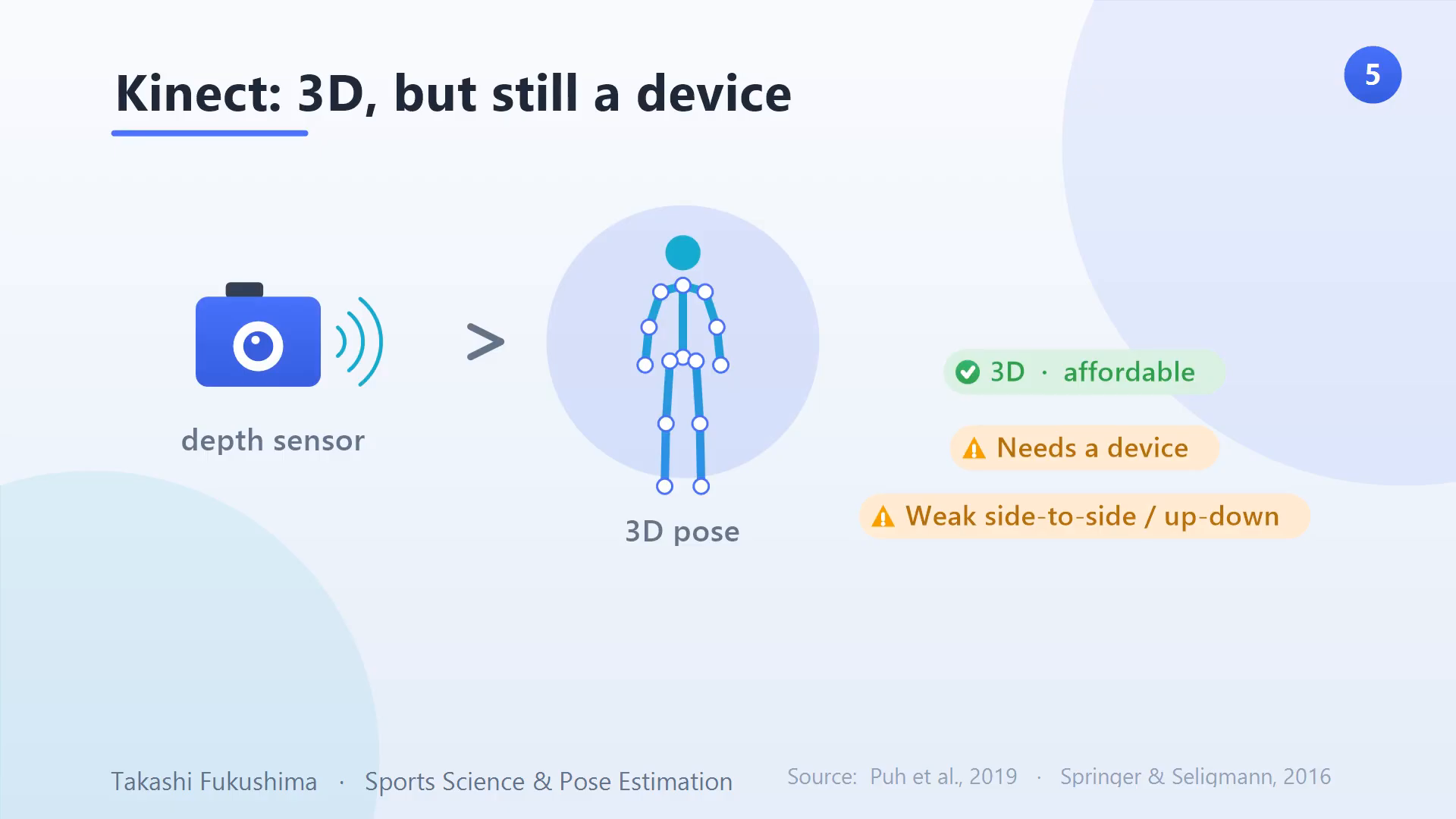
Microsoft’s Kinect tracks movement in 3D and is far cheaper and friendlier than VICON. But it still needs a dedicated device, and studies show it struggles with side-to-side and up-and-down motion. Better than 2D on paper, yet not something you already carry in your pocket.
The turning point: computer vision on your phone
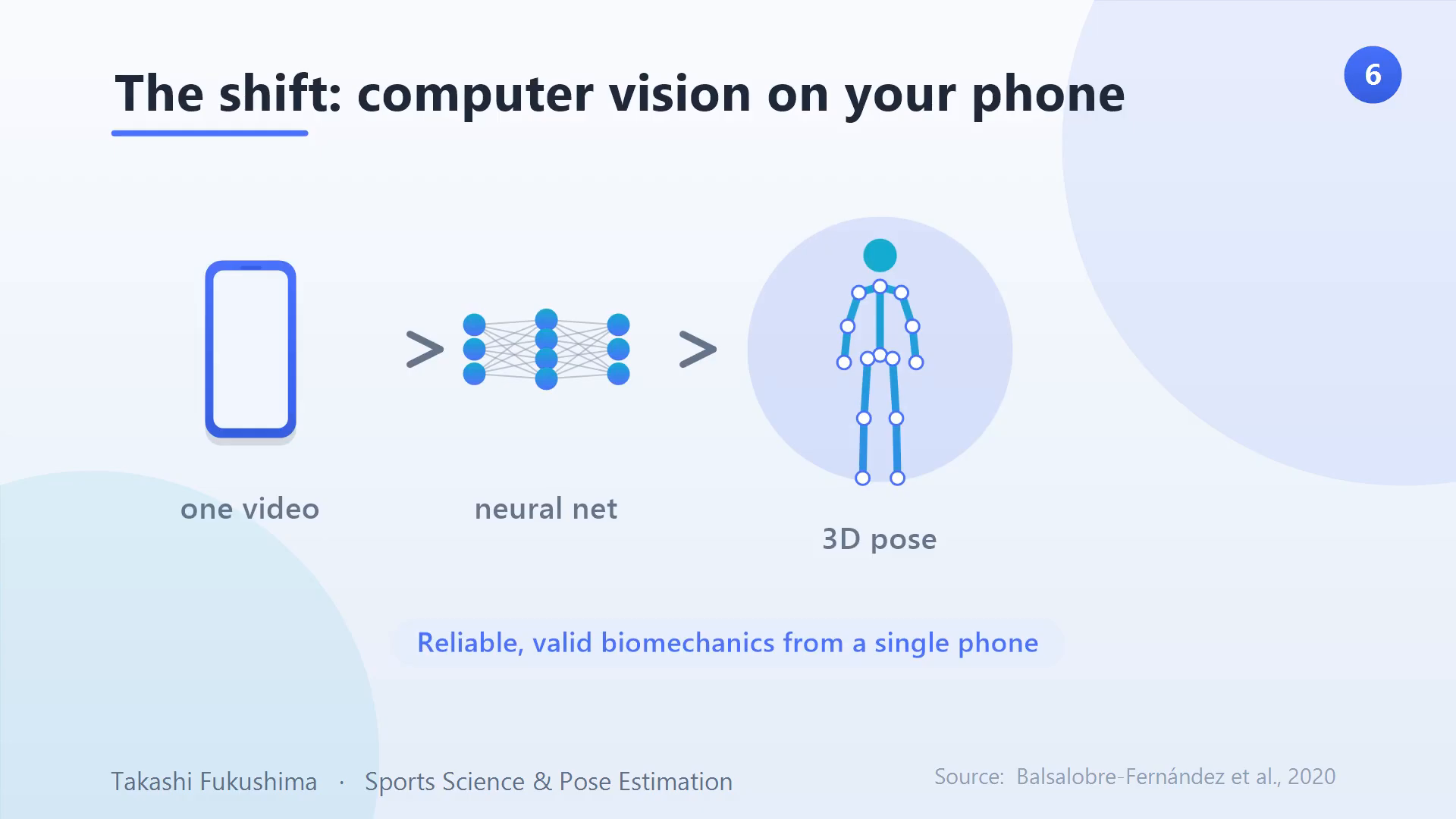
Then computer vision and machine learning changed the game. Motion capture apps have shown that reliable, valid biomechanics are possible from a single smartphone, with no extra hardware required. A neural network takes one ordinary video and infers 3D pose — the same idea behind modern markerless pose estimation accuracy work, now running on a device you already own.
Why ARKit is the promising answer
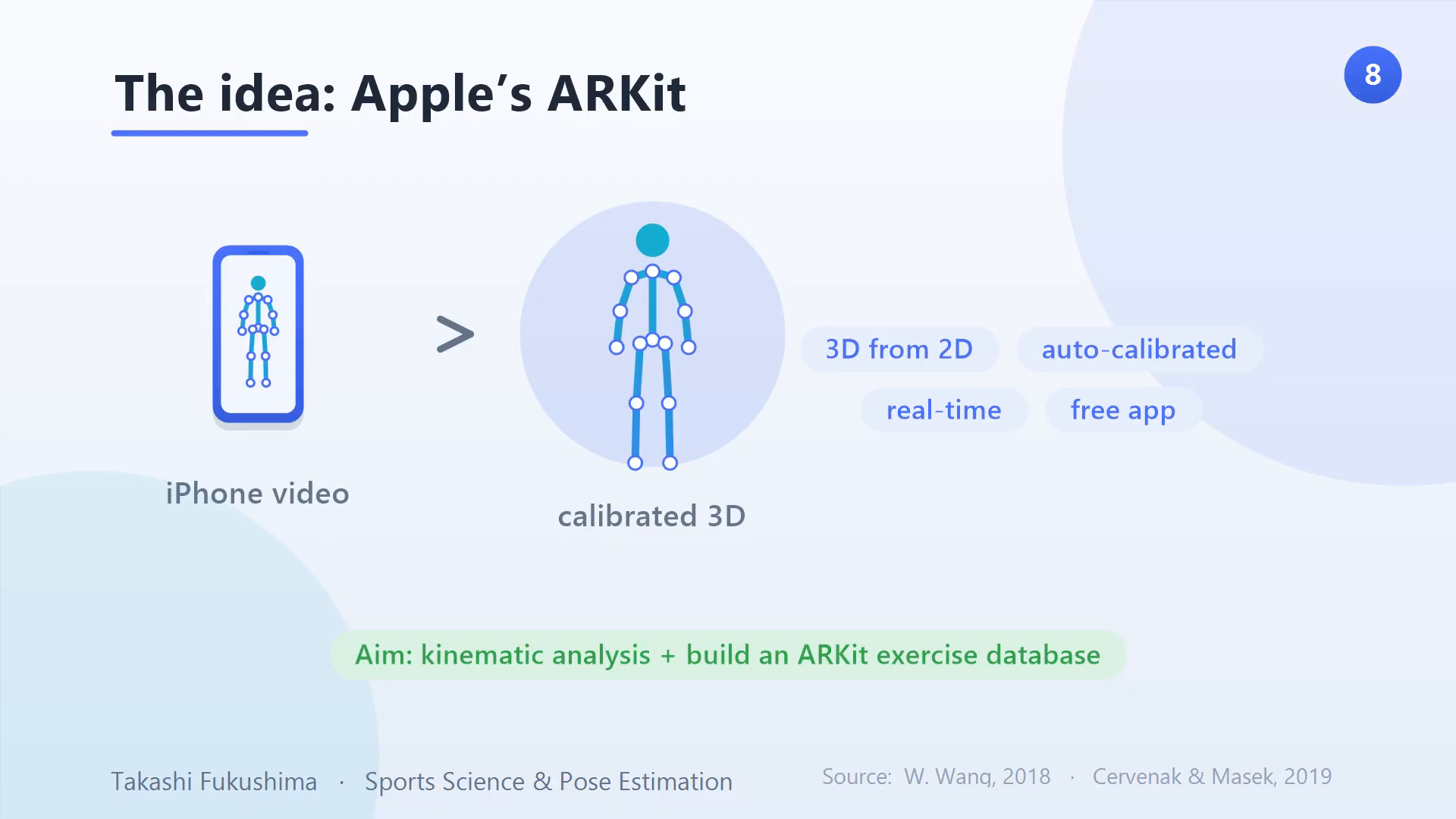
This is where ARKit comes in. Apple’s AR platform reconstructs 3D movement from ordinary 2D video, auto-calibrated to the real world, in real time, inside a free app anyone can download. That combination is what makes ARKit motion capture so promising: it collapses the accuracy-versus-usability trade-off that holds back VICON, plain 2D video, and Kinect. The idea explored in the video is to use ARKit for kinematic analysis and build an exercise database of movements it can reliably track — a first step toward correcting your own form on your phone. For the wider landscape of setups, see the overview of 3D markerless motion capture approaches.
Frequently asked questions
Can a phone really do 3D motion capture?
Yes. With computer-vision pose estimation, a single phone can recover 3D movement from ordinary video, and ARKit adds automatic real-world calibration in real time. It will not replace a marker-based lab for every measurement, but for everyday form analysis it is genuinely useful.
Is ARKit motion capture as accurate as VICON?
Not yet — VICON remains the gold standard for lab-grade accuracy. The point of ARKit is different: it trades a little accuracy for enormous gains in cost, portability, and ease of use, which is exactly what everyday movement analysis needs.
Why not just use 2D video or a Kinect?
2D video sees only one plane and misses rotation, so it can misread movements like knee valgus. Kinect captures 3D but needs a dedicated device and struggles with some directions of motion. ARKit gives 3D from a phone you already own, with no extra hardware.
The takeaway
So, can your phone fix your form? Not perfectly, and not yet — but the technology is getting there. ARKit motion capture turns an ordinary iPhone into a real-time 3D movement tool, closing the gap between lab-only accuracy and everyday accessibility. This is just the first step. For the bigger picture, start with the foundational overview of motion capture and performance analysis.
Takashi Fukushima — Sports Science & Pose Estimation.
▶ Subscribe on YouTube · Website · ORCID · Contact